
Who was Goliath?
Metaphor for trouble or a warrior charioteer?

Sportswriters love the metaphor. Low-ranked nobody defeats tennis champion. Unheard-of soccer team overcomes elite superstars.
Then there’s ‘Small nation (e.g. Greenland) defies global superpower’s bid for supremacy‘.
We love it when the plucky underdog beats the overwhelming favourite. And that, after all, is the moral of the story in the Old Testament that has survived the test of time and made us all feel better about the little guy who takes on the greedy corporate giant.
So what was the original, 3,000-year-old story really about? A 9’ 9” Philistine monster (or 6’ 9” depending on the ancient text you read) challenging the pathetic Israelites to send out their best warrior to take him on in single combat to settle the score once and for all.
Straight up, I’m telling you this because I’d love you read my take on it in a book called Line in the Sand – details below.
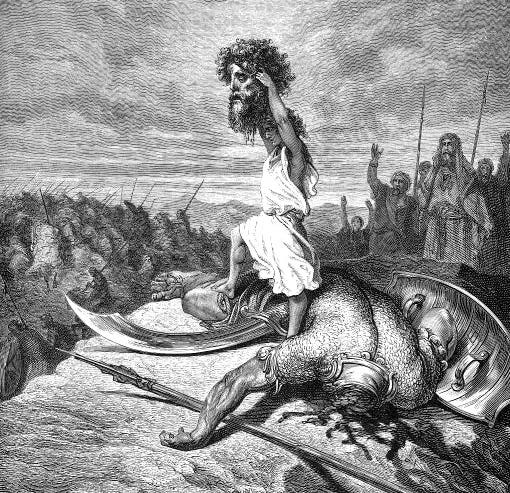
To write this tale, I did a heck of a lot of research over several years. That’s a given for historical fiction authors.
I have filled in some gaps that the ancient scribes left in their telling. We know there are inconsistencies and contradictions across the several Biblical books that report the story of King David, leaving many questions unanswered. I have drawn on my studies of the ancient Near East and Old Testament history – let’s call these ‘the facts’ – and unleashed my imagination and love of ‘a good yarn’.
In reality, there are very few facts. The only archaeological reference to King David would appear to be a reference to the House of David on a Ninth-Century BC stela found at Tel Dan in northern Israel in 1993. Most of the Biblical texts were written down long after the events surrounding David’s rise to power, with the two books of Samuel the earliest account.
Fair game, then? I decided that this bullied young shepherd should become a spy, find himself betrayed in the Philistine city where giants lived, be tortured and face branding as a slave, fight a giant called Golyat (Goliath) in a gladiatorial arena, rescue a Philistine princess and ultimately escape to warn the Israelites of pending doom.
You might think you know what happens next. I couldn’t possibly comment. But then, I have tried to anchor the story in certain Biblical facts, such as the tensions between the agricultural kingdom of Judah and the five Philistine city states, and the settling of scores in single combat – and who wouldn’t nominate a nine-foot warrior as champion?
Which brings us to Goliath, or more accurately, ‘Golyat’.
At the outset of writing Line in the Sand, I listened to a very convincing lecture by Professor Jeffrey R. Zorn of Cornell University, entitled Who Was Goliath?, in which he suggests that the Philistine giant was an elite chariot warrior. Most modern depictions of Goliath are as a very large foot-soldier, but Zorn points out his armour and weapons as detailed in 1 Samuel 17:4-7 would indicate an Aegean/Levantine chariot warrior who was probably transported to the ideal position in a battle to wreak the most havoc.
While researching for the book, I was in touch with Professor Aren Maier, director of the Tel es-Safi excavations that have uncovered so much about ancient Gath, whence the giant came, including an inscription thought to include his name or at least something similar.
I count myself lucky to have spent my childhood and early teens in three Middle Eastern countries and subsequently to have travelled widely as a journalist, always delving into the history that made each place what it is today. A burning passion to write historical fiction fuelled by travel experience and a love of ancient history.
Although currently focusing on late-Republic Roman themes, with several novels published by Sapere, I hope to return to my formative years in the Middle East and extensive studies of ancient Mesopotamia, including the amazing stories waiting to be reimagined of Assyrians, Israelites, Phoenicians and Philistines.
Just in case you’re interested, here’s a summary of how Line in the Sand begins:
1000 BC – His mother is reviled as a whore and his half-brothers despise him. The best Dawid of Beth Lechem can do is escape.
But just as life couldn’t get much lower for the youth they call Leper, he is recruited as a spy. His mission – to find out about the superior weapons and invasion plans of the warlike Philistines.
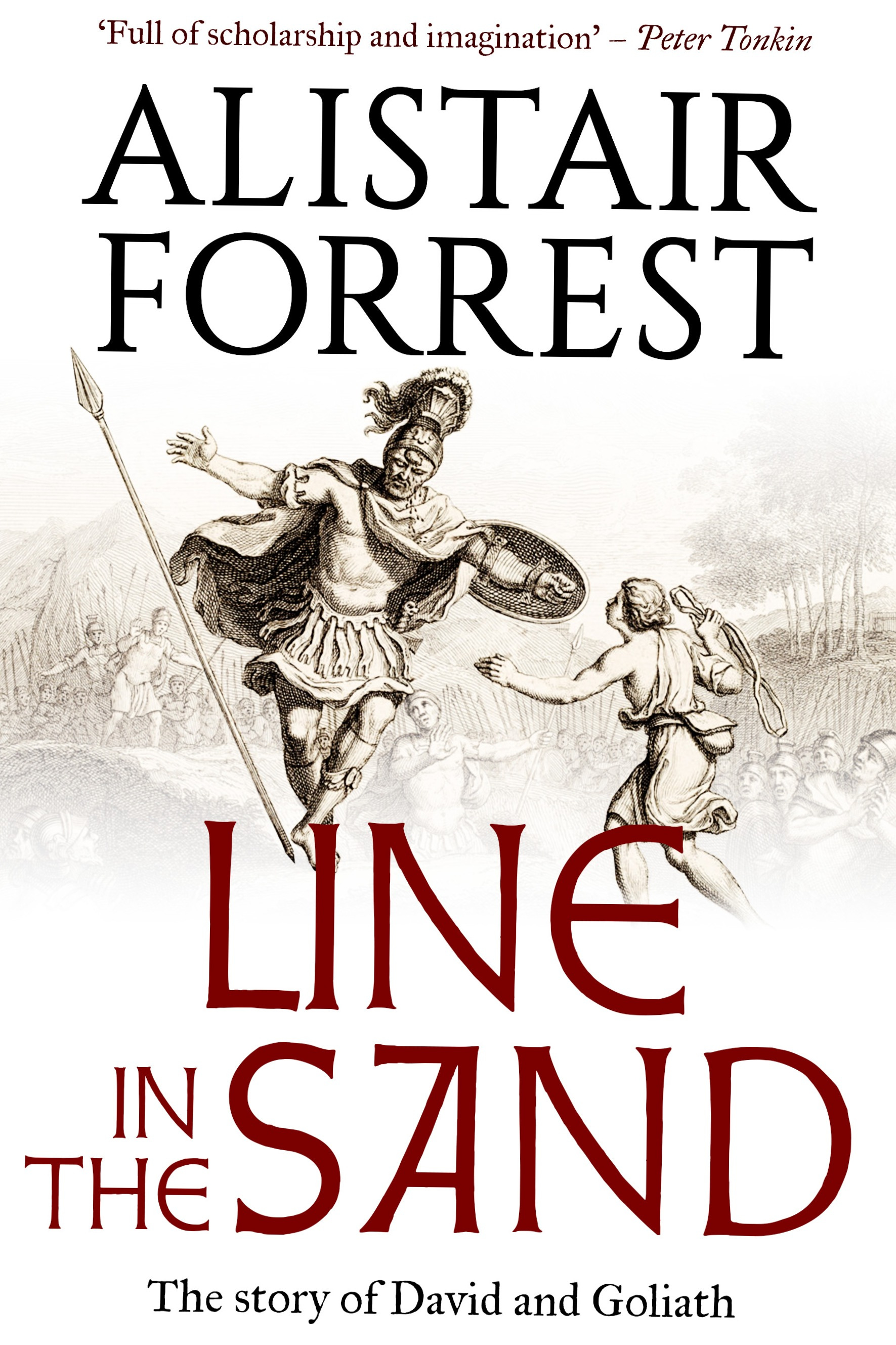
There’s more, and below you’ll find like, comment and share buttons. Please click merrily and make my day.
As an aside, do you know what a medium pace away-swing bowler is?
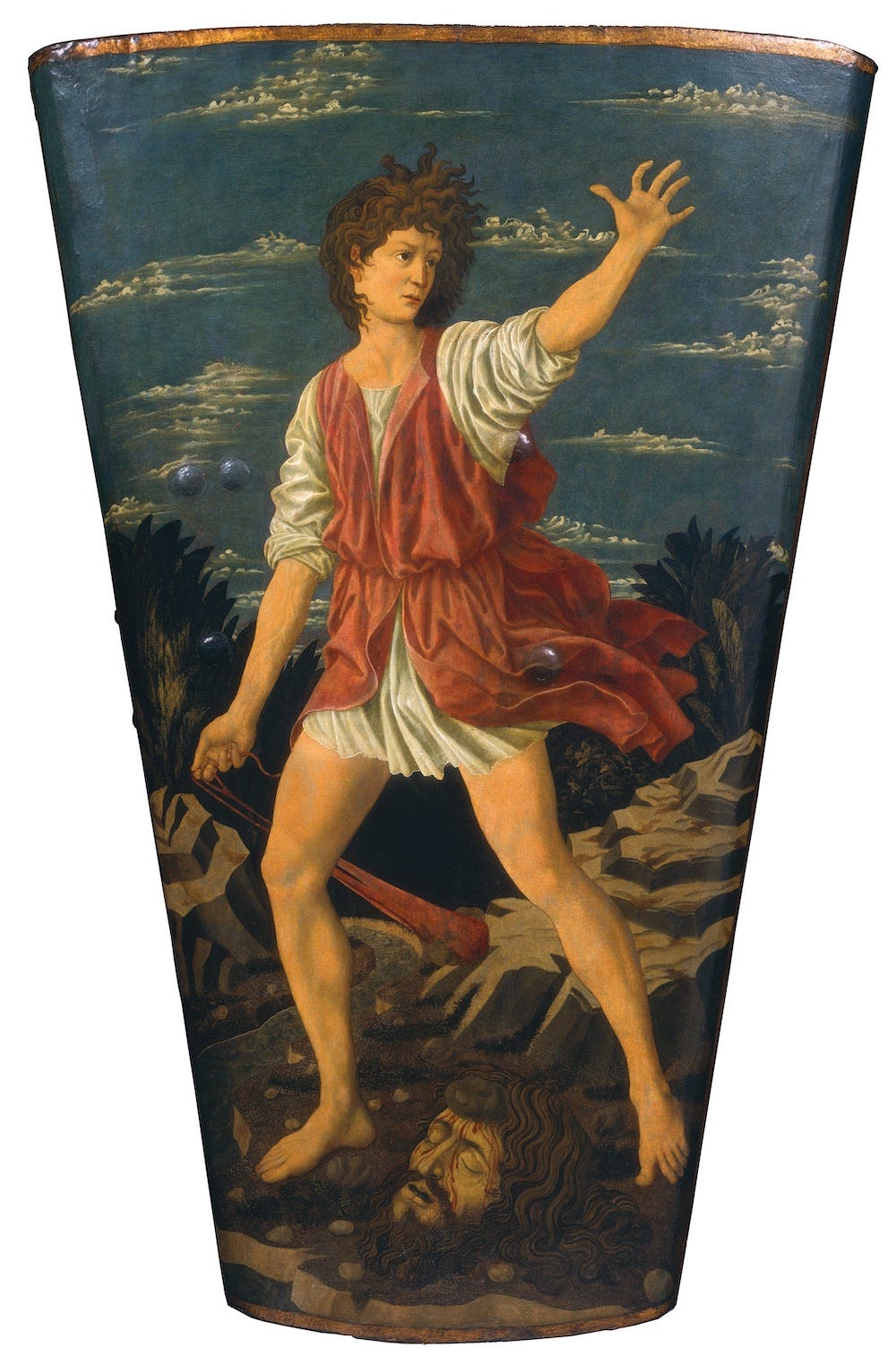
Listen up and look at this picture by Renaissance painter Andrea del Castagno, painted centuries before anyone had thought about the glorious game of cricket. Young David’s delivery is right out of the cricket manual for an away-swing bowling action. It’s what I did for years for various cricket teams (as well as batting and wicket-keeping) and del Castagno only had to substitute a red Dukes ball for David’s sling and I promise you that cricket ball would dip away from a right-handed batsmen at the last minute and have him handsomely caught at first slip.
So now you know, if you didn’t already.